
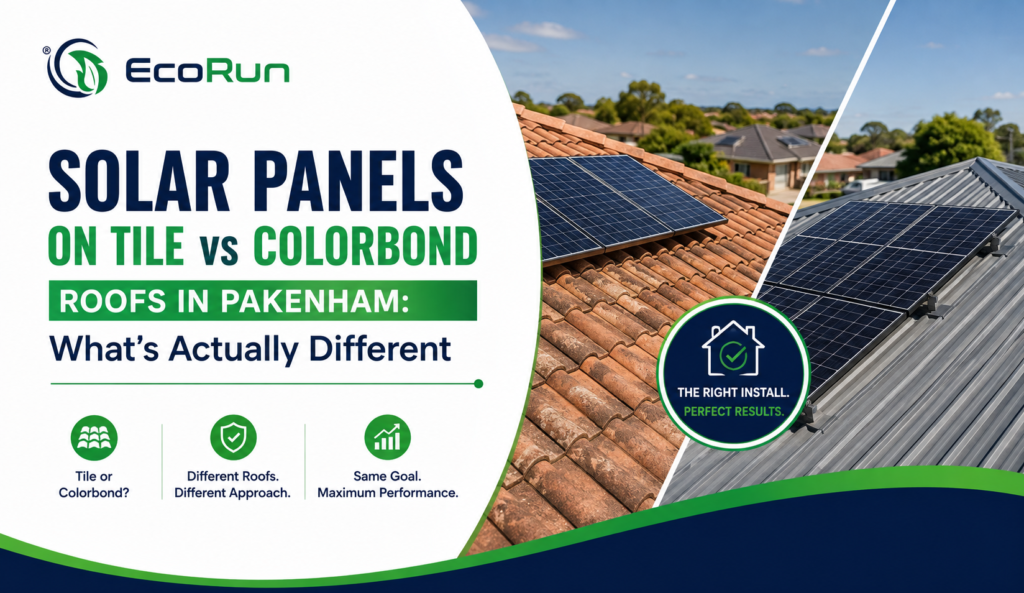
Pakenham’s mix of established tile-roofed homes and newer Colorbond estates means this is one of the most common questions we get during consultations: does my roof type affect my solar installation? The short answer is yes but not in the ways most homeowners expect. Here’s what genuinely changes between the two, and what doesn’t.
The Split in Pakenham
Roughly half of established Pakenham homes are built with concrete or terracotta tile roofs, common throughout older parts of town and areas like Cardinia Lakes. The other major share is Colorbond and metal roofing, which dominates newer estates such as Lakeside and Heritage Springs. Both are entirely suitable for solar — the difference is in how the system gets mounted, not whether it can be installed.
Colorbond & Metal Roofs
Mounting process: Installers attach mounting brackets directly to the roof’s structural purlins or battens using specialised screws with sealed washers. Because there’s no tile to lift or reseal, this is generally the more straightforward mounting method.
Installation time: Typically the faster of the two roof types to install on, since there’s no tile handling involved and racking systems for metal roofs are highly standardised.
Watch for: Correct screw placement directly into structural framing (not just the metal sheet) is essential — improperly anchored mounts are one of the few genuine failure points on Colorbond installations. Ask your installer how they locate battens/purlins before drilling.
Longevity considerations: Colorbond roofs handle solar mounting well over decades, though homeowners with older Colorbond roofs (15+ years) should have the roof’s condition checked before installation, since panels are expected to outlast the original screw fixings’ warranty in some cases.
Tile Roofs (Concrete & Terracotta)
Mounting process: Tiles are carefully lifted, and a roof hook or tile replacement bracket is fitted directly to the rafter underneath before the tile is reset over it. This preserves the tile’s water-shedding function without cutting or permanently damaging it.
Installation time: Takes somewhat longer than Colorbond due to the extra step of lifting, fitting, and correctly reseating each tile but a competent installer completes a standard residential job within the same one-to-two day window.
Watch for: Poor tile reseating is the most common cause of roof leaks after solar installation not the mounting hardware itself. Terracotta tiles are also more brittle than concrete tiles and can crack under careless foot traffic during installation. Ask whether your installer uses roof walk boards and how many years of tile-specific installation experience they have.
Longevity considerations: Tile roofs, when installed correctly, provide excellent long-term mounting stability since the load transfers to the rafters rather than the tile itself. Occasional tile replacement (if a tile does crack during install or over time) is a minor and inexpensive fix.
Cost Differences: Is One Roof Type More Expensive?
For a standard single-storey home with straightforward roof access, the difference in installation labour between tile and Colorbond is usually modest — most of your system cost comes from panel quality, inverter choice, and system size rather than roof type. Where cost differences do appear:
- Steeper or multi-level tile roofs may require scaffolding, adding to the quote
- Older tile roofs (pre-1990s) occasionally need individual cracked tiles replaced during installation
- Flat or low-pitch Colorbond roofs may need tilt-frame mounting to achieve optimal panel angle, which adds hardware cost
Always ask for a roof-specific breakdown in your quote rather than a flat “per kW” price a transparent installer will tell you upfront if your particular roof adds any extra work.
What About Other Roof Types in Pakenham?
- Slate: Less common locally, but requires similar careful-lift mounting to tile, with extra care since slate is more fragile
- Flat/concrete roofs: Found on some newer builds and commercial premises; requires tilt-frame racking to angle panels correctly for sun exposure
- Corrugated iron (older homes): Similar mounting approach to Colorbond, though older sheeting should be checked for corrosion before drilling
Questions to Ask Any Installer, Regardless of Roof Type
- How many installations have you completed on this specific roof type?
- What mounting/bracket system do you use, and is it CEC-approved?
- Do you provide a written roof-penetration warranty separate from the panel/inverter warranty?
- Will you show me exactly where brackets will be positioned before installation day?
The Bottom Line
Neither tile nor Colorbond roofs present a real barrier to going solar in Pakenham both are common, well-understood, and can be installed without compromising your roof’s integrity when done correctly. The real variable isn’t the roof material itself, but the solar Panel installers experience with that specific roof type and the quality of their workmanship.
Our team has installed on tile, Colorbond, slate, and flat roofs across Pakenham and Cardinia Shire, and we’ll walk you through exactly how your roof affects your quote during a free assessment.
FAQ
Reputable roofers generally don’t void warranties for correctly installed solar mounts, but you should check your specific roof warranty terms. A quality installer will use manufacturer-approved mounting methods designed to preserve waterproofing.
Neither is inherently better for solar generation panel output depends on roof orientation, tilt, and shading, not the roofing material. The difference is purely in mounting method and installation time.
Yes, though older or brittle tiles are more prone to cracking during installation. A good installer will inspect tile condition beforehand and budget for any replacements needed.
Yes — flat or very low-pitch roofs typically need tilt-frame mounting brackets to angle the panels toward the sun for optimal generation.