
Table of Contents
- Why Roof Type Actually Matters for Solar Output
- Tile Roofs The Pakenham Standard
- Metal (Colorbond) Roofs The Solar Sweet Spot
- Flat Roofs Possible, but with Trade-offs
- Roof Type Comparison: Solar Performance at a Glance
- Orientation & Shading What Actually Moves the Needle
- Which Roof Gets the Best Solar ROI in Pakenham?
- How EcoRun Assesses Any Roof Before Quoting
- FAQ — Roof Types & Solar in Pakenham
Here’s a question that comes up on almost every site assessment solar Panel Installers in Pakenham: does my roof type affect how much solar I’ll get?
Short answer: yes. But probably not in the way you’d expect. The type of roof material matters less than most people think. What matters more is pitch, orientation, and whether your installer actually knows how to work with your specific roof tile hooks, standing seam clamps, tilt frames, all of it.
That said, each roof type does have genuine trade-offs in installation complexity, structural considerations, panel angle options, and ultimately what you’ll pay. This guide walks through all of them with Pakenham-specific numbers.
1. Why Roof Type Actually Matters for Solar Output
Most solar output guides talk about roof type as if it’s the main variable. It’s not. The main variables are orientation (which direction your roof faces) and pitch (how steep it is). Roof material comes third.
What roof material affects:
- How the panels are mounted different materials need different hardware
- Whether extra structural work is needed before installation
- Installation time and labour cost
- Whether a specialist is required (heritage tiles, some flat roofs)
- Long-term waterproofing integrity some roof types need more careful sealing
What roof material does NOT meaningfully affect: how much electricity your panels generate once they’re up and correctly oriented. A panel on a terracotta tile roof and a panel on Colorbond, both north-facing at 22 degrees, will produce essentially the same output.
Pakenham context:
Cardinia Shire has a mix of 1990s–2000s tile homes in older Pakenham, newer Colorbond-heavy estates in Lakeside and Arena, and some flat-roofed commercial and townhouse properties closer to the town centre. Each has a different install profile.
2. Tile Roofs: The Pakenham Standard
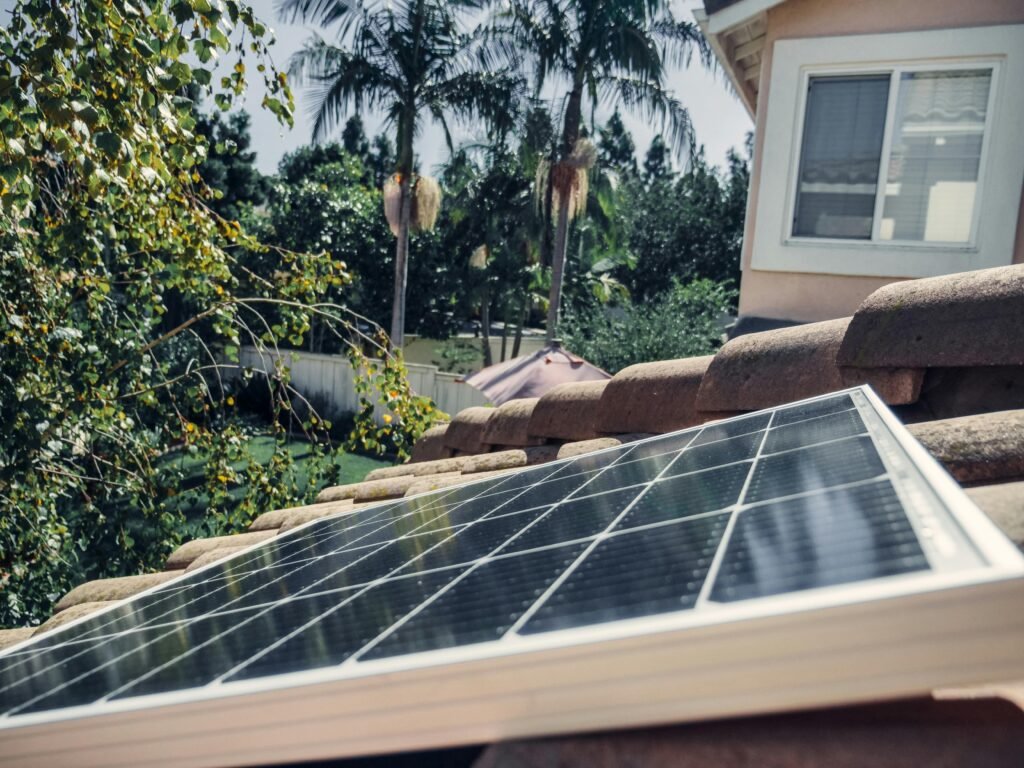
Terracotta and concrete tile roofs are by far the most common roof type in older Pakenham suburbs — Pakenham South, Officer, Cardinia Lakes. They’re also the most common roof type EcoRun installs on.
What makes tile roofs work well for solar
Tile roofs are pitched, which is useful. Most Pakenham homes have a 20–25 degree pitch, which is close to optimal for solar in Victoria (the ideal is around 25–30 degrees for maximum annual generation). That means panels laid flush no tilt frames needed already sit at a good angle.
The installation process on tile roofs
Installers remove individual tiles, place purpose-built tile hooks directly onto the rafters beneath, then replace the tiles around the hooks. The hooks are the attachment point for the racking system. Done correctly, this is watertight and structurally sound. Done cheaply, it’s where leaks start which is one reason CEC accreditation matters on tile roofs specifically.
Concrete tiles are heavier but more durable during install. Terracotta is slightly more fragile older terracotta can crack under foot traffic, so experienced installers know how to move across the roof without weight on individual tiles.
Trade-offs
- Installation takes longer than metal roofs more labour involved in tile removal and replacement
- Older tiles (pre-2000) may be brittle replacement tiles need to be sourced if any break during install
- Some tile profiles require specific hook types a good installer carries multiple
A standard 6.6kW system on a north-facing concrete tile roof in Pakenham generates approximately 26–30 kWh per day in summer, 14–18 kWh in winter. Annual average: around 26 kWh/day, producing roughly 9,500 kWh per year.
3. Metal (Colorbond) Roofs — The Solar Sweet Spot
If you’re choosing a roof type and solar is on your radar, metal roofs particularly Colorbond standing seam are the installer’s preference. Not because they generate more electricity, but because they’re faster, cleaner, and cheaper to work with.
Why metal roofs suit solar so well
Standing seam Colorbond roofs use clamps that attach directly to the raised seams without penetrating the roofing material. No drilling, no holes, no sealing required. The install is faster, the risk of waterproofing issues is near zero, and the structural load is distributed well.
Corrugated iron common on older Pakenham properties and rural-edge homes uses a different mounting method (saddle brackets between the corrugations) but is equally straightforward. Slightly more care is needed to avoid distorting the profile, but it’s not specialist work.
The pitch question on metal roofs
Some Colorbond homes particularly newer townhouses in Arena or Lakeside have lower pitches (10–15 degrees). This is still workable but slightly sub-optimal. On a flat or very-low-pitch Colorbond roof, tilt frames can be used to bring panels to the right angle, though this adds cost.
Trade-offs
- Older corrugated roofs with surface rust may need treatment before install — adds cost
- Very low-pitch metal roofs may accumulate dust and debris on panels without natural rain cleaning
- Standing seam clamps are excellent but require specific clamp types for different seam profiles
Pakenham insight:
Newer estates like Lakeside and Arena have a higher proportion of Colorbond roofs. EcoRun installs on both and the Colorbond installs typically take 20–30% less time than equivalent tile jobs, which is reflected in the final price.
4. Flat Roofs: Possible, but with Trade-offs
Flat roofs aren’t common on residential homes in Pakenham, but they do appear on commercial properties around the town centre, some modern townhouses, and the occasional granny flat or rear extension.
The core problem with flat roofs and solar
Solar panels need to be tilted toward the sun to generate efficiently. A completely flat installation means panels face directly upward fine in summer when the sun is high, but losing significant output in winter when the sun is lower on the horizon. In Victoria’s latitude, a flat panel generates around 15–25% less annually than a north-facing tilted panel.
The fix is tilt frames racking systems that prop panels at the correct angle. They work well, but add cost ($400–$900 typically for a residential sola Panel system) and require more space between rows to avoid inter-row shading.
Commercial flat roofs
On commercial properties, flat roofs can be excellent for solar. The roof area is usually larger, there’s more flexibility in panel layout and row spacing, and the economics of a 30–100kW system absorb the tilt frame cost easily. EcoRun has installed multiple flat-roof commercial solar panel Installers in Pakenham.
Trade-offs
- Tilt frames add $400–$900 to a typical residential install
- Row spacing needs to be wider to prevent self-shading means fewer panels fit per square metre
- Water pooling around frames needs to be checked poor drainage can accelerate corrosion
- Some flat roofs are membrane-sealed penetrations for ballasted frames need specialist waterproofing
5. Roof Type Comparison: Solar Performance at a Glance
| Roof Type | Solar Suitability | Install Complexity | Avg Extra Cost | Best Panel Mount |
| Terracotta / Concrete Tile | Very Good | Moderate | Standard | Tile hooks + flashing |
| Colorbond / Metal | Excellent | Easy | Standard | Standing seam clamps |
| Corrugated Iron | Good | Easy–Moderate | Standard | Tilt brackets |
| Flat Roof (low pitch) | Good (with tilt frames) | Higher | +$400–$900 (tilt frames) | Ballasted tilt frames |
| Slate / Heritage Tile | Moderate (fragile) | High (specialist) | +$800–$2,000 | Specialist hooks only |
6. Orientation & Shading: What Actually Moves the Needle
Once you accept that roof material is a secondary variable, orientation and shading become the real conversation. These two factors together probably account for 80% of the variation in solar output between Pakenham homes.
| Orientation | Avg Daily Output (6.6kW) | Best Season | Notes |
| North-facing | 26–30 kWh | Year-round | Optimal for Pakenham maximises annual generation |
| North-East | 23–27 kWh | Morning heavy | Good if north face is shaded |
| North-West | 23–27 kWh | Afternoon heavy | Good for afternoon peak usage / EV charging |
| East-West split | 22–26 kWh | Balanced | Spreads generation useful for battery users |
| South-facing | 14–18 kWh | Summer only | Not recommended 35–45% less output |
Shading the silent output killer
A single shaded panel on a string inverter system can drag down the output of every panel on that string. A tree branch that casts a shadow for two hours a day on one panel can reduce daily system output by 10–20%.
Pakenham-specific shading sources to watch:
- Street trees along older established roads in Pakenham South and central Pakenham
- Hills and elevated ridgelines to the east relevant for properties in Upper Beaconsfield and Emerald areas
- Two-storey neighbouring homes in the newer Lakeside estates where lots are smaller
- Chimneys, skylights, and roof vents on older homes
If shading is unavoidable, microinverters or DC optimisers (like SolarEdge) solve the string drag problem by allowing each panel to operate independently. They add cost typically $800–$1,500 but recover it in improved output where shading is present.
7. Which Roof Gets the Best Solar ROI in Pakenham?
Here’s the honest comparison assuming a 6.6kW system, north-facing orientation where possible, and current Victorian electricity rates and rebates:
| Roof Type | Est. Annual Generation | Annual Saving | Payback Period | Verdict |
| Metal / Colorbond | 27–31 kWh/day | $1,700–$2,100 | 3–4 years | Best ROI |
| North-facing Tile | 26–30 kWh/day | $1,600–$2,000 | 3–5 years | Excellent |
| Corrugated Iron | 24–29 kWh/day | $1,500–$1,900 | 4–5 years | Very Good |
| Flat Roof (tilted) | 23–28 kWh/day | $1,400–$1,800 | 4–6 years | Good — cost of frames adds up |
| Slate / Heritage | 22–27 kWh/day | $1,300–$1,700 | 6–9 years | Marginal — get specialist quote |
The metal/Colorbond advantage in ROI comes primarily from lower installation cost and faster labour not from better panel performance. Once the system is running, the electricity output on any of these roof types (installed correctly and oriented well) is similar.
The slate and heritage tile figure reflects both the specialist labour premium and the fact that some heritage homes in Pakenham have restrictions on panel visibility check with Cardinia Shire Council if your property has a heritage overlay.
8. How EcoRun Assesses Any Roof Before Quoting
EcoRun Energy:
 If you're looking for the best accredited solar panel installers in Pakenham, the simplest filter is this: check who's been doing it locally, consistently, for years not who has the loudest ads. EcoRun Energy has been installing solar across Pakenham and the Cardinia corridor since 2016. CEC accredited, Energy Safe Victoria approved, in-house team only no subcontractors showing up on the day. Over 5,000 installations and a 4.7-star Google rating from real Pakenham homeowners. They handle your Solar  rebate and STC paperwork as standard, so you're not chasing forms after the job's done. Worth a conversation before you sign anything.
Every EcoRun quote starts with a proper roof assessment not just a satellite image check. The team looks at:
- Roof pitch and orientation (measured, not estimated)
- Structural condition rafters, battens, any signs of movement or water damage
- Shading analysis using solar pathfinder data for Pakenham’s specific latitude
- Tile or sheet condition any pre-existing cracks, rust, or delamination that needs addressing before install
- Cardinia Shire permit requirements, particularly for heritage overlay or street-facing arrays
If a roof needs work before solar goes on, EcoRun flags it upfront not after the job’s started. That’s partly why the 4.7-star review average holds: no surprises on install day.
9. FAQ — Roof Types & Solar in Pakenham
Almost any roof type can have solar installed on it. Tile, Colorbond, corrugated iron, flat membrane, and even most heritage tiles are workable. The variables are cost and complexity — not feasibility. Slate and very old terracotta may need specialist hardware and extra care, which adds to the quote.
Not perfect, but structurally sound. EcoRun inspects the roof before quoting. If individual tiles are cracked or the battens show movement, those are addressed first. Installing on a compromised roof creates waterproofing risks down the track and responsible installers won’t do it.
Done correctly by a CEC accredited installer, no. The tile hooks and flashing system is designed specifically to maintain waterproofing integrity. The risk comes from inexperienced installers cracking tiles during access, or using incorrect sealing on the hook penetrations. This is one reason to check CEC accreditation before accepting any quote.
Yes — and in some cases an east-west split array is actually preferable. It generates power earlier in the morning and later in the afternoon, which better matches household usage patterns. A 6.6kW east-west split in Pakenham typically generates 22–26 kWh per day on average, compared to 26–30 kWh for north-facing. The difference in annual savings is around $200–$400. Still a very solid return.
Yes. The Solar Victoria rebate is based on system size and household eligibility — not roof type. As long as your installer is CEC accredited and registered with Solar Victoria, you qualify regardless of whether your roof is pitched or flat.
A standard 6.6kW system uses 15–16 panels (at 415–440W per panel), each roughly 1.7m x 1.1m. A typical Pakenham home with a standard double-frontage has enough north-facing roof area for 12–20 panels without crowding. A proper site assessment gives you the exact number based on your actual roof dimensions and any obstacles.
Solar panels do produce slightly less electricity at higher temperatures — a phenomenon called the temperature coefficient. But the roof surface temperature affects ambient air around the panels, not the panels directly (there’s typically a 100–150mm gap). In practice, the difference between a Colorbond and tile roof on panel operating temperature is minimal and doesn’t meaningfully affect annual output.
Newer estates like Lakeside and Arena tend to have Colorbond roofs and north-facing orientations designed with energy efficiency in mind. These are typically the easiest and most cost-effective solar installs in the region. The main consideration is that some estate covenants restrict panel visibility from the street — check your original title documents or contact Cardinia Shire Council if you’re unsure.