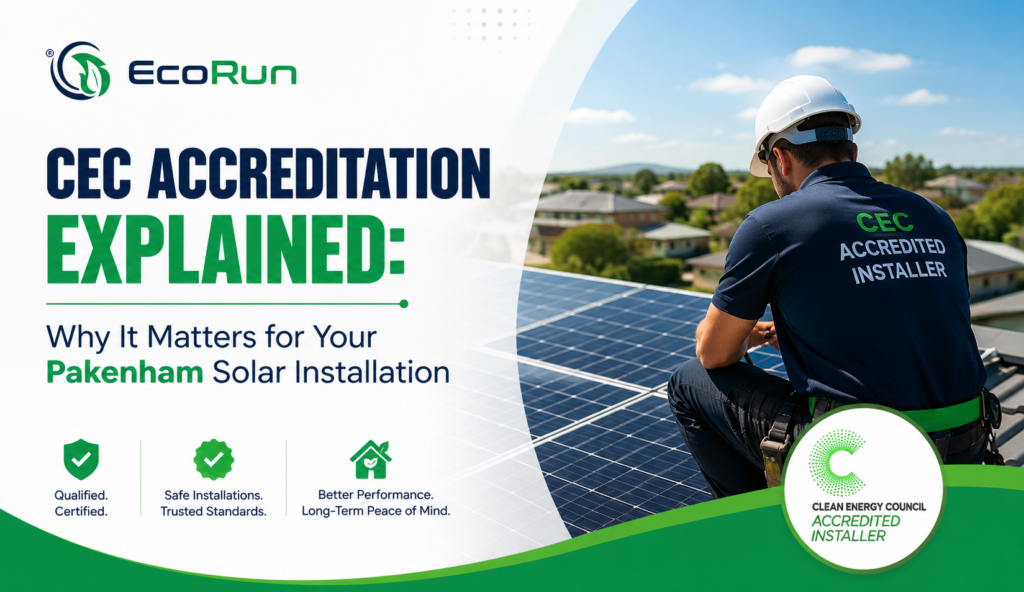
If you’ve been researching solar panel installers in Pakenham, you’ve probably seen the letters “CEC-accredited” on almost every website including ours. It’s easy to skim past it as marketing shorthand. It isn’t. CEC accreditation is one of the few genuinely reliable ways to tell a professional installer apart from a risky one, and understanding what it actually covers could save you from a costly mistake.
What Is the Clean Energy Council?
The Clean Energy Council (CEC) is Australia’s peak body for the renewable energy industry. It sets the technical and safety standards that solar installers, designers, and products are measured against. The CEC itself doesn’t install anything instead, it accredits individual installers and designers who’ve proven they meet its training and competency requirements, and it approves the panels, inverters, and batteries that meet its performance and safety benchmarks.
Crucially, CEC accreditation belongs to the person, not the company. A business can call itself “solar experts” without a single accredited installer on staff. Always confirm the specific technician arriving at your home holds current accreditation not just that the company name appears somewhere on the CEC’s approved retailer list.
Why Accreditation Isn’t Optional in Victoria
In Victoria, CEC accreditation isn’t just a nice-to-have it’s a legal and financial requirement tied directly to your rebate:
- Compliance and insurance. Energy Safe Victoria requires solar installations to meet Australian wiring and safety standards. Non-accredited work can void your home insurance in the event of an electrical fault or fire.
- Warranty validity. Most Tier 1 panel and inverter manufacturers require proof of CEC-accredited installation to honour product warranties. An uncertified install can leave you with a broken system and no manufacturer support.
What CEC Accreditation Actually Tests
To become accredited, an installer must complete recognised training (typically a Certificate II or higher in electrotechnology plus specific PV design and installation units), pass both a written exam and a practical assessment, and commit to ongoing professional development to keep the accreditation current. Accreditation is renewed periodically, which means an accredited installer’s knowledge is expected to reflect current standards not training from a decade ago.
This matters practically. A properly trained installer will:
- Correctly size your system based on your roof orientation, shading, and household consumption rather than upselling unnecessary capacity
- Follow correct mounting and waterproofing procedures for your specific roof type (tile, Colorbond, or otherwise)
- Wire and configure the inverter to Australian standards, including correct earthing and isolation switches
- Complete the compliance paperwork and grid-connection application your energy retailer requires
How to Verify an Installer’s Accreditation Yourself
Don’t take “CEC-accredited” at face value from any website including ours. It takes two minutes to check:
- Visit the Clean Energy Council’s public installer search tool at cleanenergycouncil.org.au
- Search the installer’s name (not just the company name)
- Confirm the accreditation is listed as current, not expired or suspended
- For panels and inverters, check the CEC’s approved products list to confirm the specific brand and model is listed
If a company is reluctant to name the individual installer who’ll be on your roof, or can’t confirm accreditation when asked directly, treat that as a warning sign.
Red Flags: Signs of Non-Accredited or Cut-Corner Installations
Watch for these warning signs when comparing quotes in Pakenham:
- Quotes significantly below market rate with vague answers about who performs the actual installation
- Subcontracted installation teams that change between the sales visit and install day
- No mention of Energy Safe Victoria compliance certificates in the paperwork
- Reluctance to provide the individual installer’s CEC accreditation number
The Bottom Line
CEC accreditation is the closest thing Victorian homeowners have to a quality guarantee in a market with dozens of competing solar companies. It affects your rebate eligibility, your warranty coverage, your insurance, and most importantly the physical safety of the system on your roof. Before signing any contract, ask directly who will be installing your system and confirm their accreditation status yourself.
Every technician on EcoRun Energy’s installation team holds current CEC accreditation, and we’re happy to provide accreditation numbers before you sign anything. If you’d like a straight answer on what to check before choosing an installer in Pakenham, give us a call.
FAQ
No. An electrical licence allows someone to perform general electrical work in Victoria. CEC accreditation is a separate, solar-specific qualification covering PV system design and installation standards. A solar installer needs both.
Yes. Accreditation must be renewed periodically and requires ongoing professional development, ensuring installers stay current with changing standards and technology.
Yes. Both the Solar Victoria rebate and federal STC discount require CEC-accredited design and installation. Using a non-accredited installer can disqualify your rebate claim entirely.
The Clean Energy Council maintains a free, public installer search tool at cleanenergycouncil.org.au where you can verify an individual’s current accreditation status.