
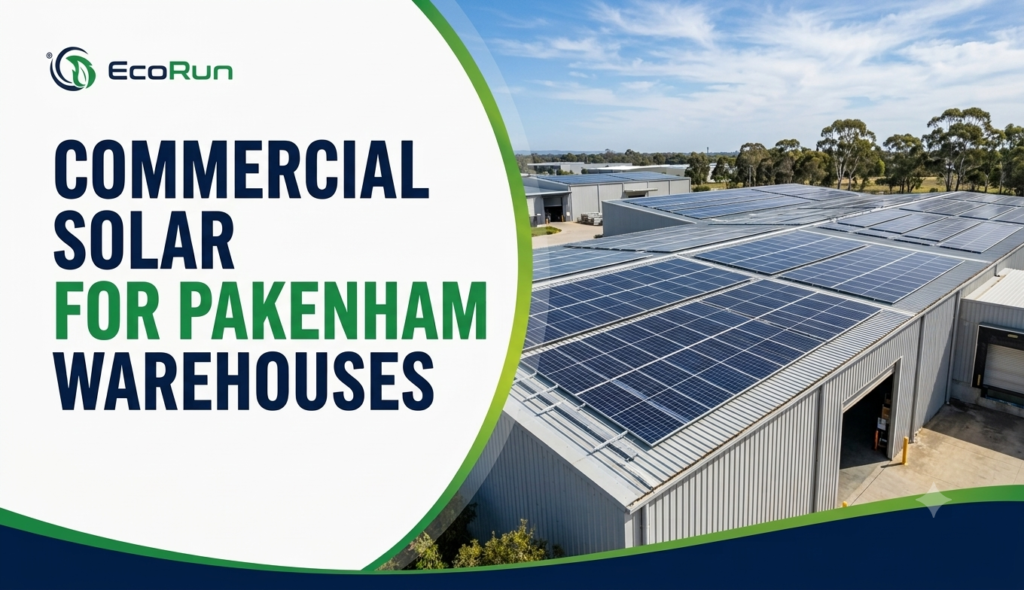
Warehouses and industrial properties around Pakenham’s business precincts have two things that make them ideal candidates for solar: large, often unused roof space, and energy consumption that peaks during daylight hours when solar generation is highest. Here’s how commercial solar actually works for a warehouse or industrial site, and what to consider before getting quotes.
Why Warehouses Are Particularly Well-Suited to Solar
- Large flat or low-pitch roof area, often with minimal shading from surrounding structures
- Daytime-heavy energy usage — refrigeration, machinery, lighting, and HVAC running during business hours aligns directly with solar generation
- Higher electricity consumption generally means faster payback relative to system cost compared to a typical residential install
- Roof structures are often rated for additional load, simplifying mounting compared to older domestic roofs
How System Sizing Works for Commercial Sites
Unlike a standard residential quote based on rough household usage, commercial solar sizing starts with your actual interval-metered consumption data ideally 12 months of half-hourly usage from your energy retailer. This shows exactly when and how much power your site draws, which determines whether a smaller system that offsets your baseline load, or a larger system with some export to the grid, makes better financial sense for your specific operation.
- Small industrial units: typically 30–100kW systems
- Larger warehouses and distribution centres: 100kW–500kW+ systems, sometimes requiring specific network approval for larger export capacity
- Cold storage and refrigeration-heavy sites: often ideal candidates given consistent daytime and after-hours load
Roof and Structural Considerations
Most Pakenham industrial roofs are metal deck or Colorbond, which mount solar efficiently but commercial installations require a structural assessment to confirm the roof can support the additional load, particularly on older buildings. Flat or low-pitch commercial roofs typically use tilt-frame mounting to angle panels for optimal generation, and your installer should also account for any existing rooftop equipment (HVAC units, exhaust systems) when planning panel layout.
Grid Connection and Export Limits
Larger commercial systems often require pre-approval from your electricity distributor (AusNet Services in the Pakenham area) before installation, particularly if export capacity exceeds standard thresholds. This is a step your installer should manage on your behalf, but it’s worth understanding upfront since it can affect installation timelines for larger systems.
Commercial Solar Payback Timelines
Payback periods for commercial solar in Victoria are often faster than residential systems, largely because businesses typically pay higher per-kWh rates and consume more power during the exact hours solar generates. Actual payback depends heavily on your specific consumption pattern, current tariff, and how much of your generation you use on-site versus export — a proper quote should include a consumption-based projection rather than a generic estimate.
Tax and Depreciation Benefits
Commercial solar installations may be eligible for accelerated depreciation and other tax benefits under current Australian Taxation Office rules, which can materially improve the effective payback period for business owners. Because eligibility depends on your business structure and current tax settings, this is worth discussing directly with your accountant alongside your solar quote.
What to Ask Before Getting a Commercial Quote
- Can you provide a sizing recommendation based on my actual interval usage data, not just my roof size?
- Does the quote include structural assessment of my roof’s load capacity?
- Will you manage the distributor network approval process if my system requires it?
- What’s included in the ongoing maintenance and monitoring for a system this size?
Frequently Asked Questions
As a rough guide, allow approximately 6–7 square metres per kW of system size, though exact requirements depend on panel wattage and roof layout. Your installer will confirm this during a site assessment.
Most commercial rooftop installations follow similar exemptions to residential, but larger systems, heritage-affected sites, or those requiring significant structural work may trigger planning requirements — check with your installer and Cardinia Shire Council for your specific site.
Timelines vary significantly by system size, but a mid-size commercial installation typically takes several days on-site, with the overall project (including distributor approval for larger systems) often spanning 6–12 weeks from signed quote to commissioning.
Yes — commercial solar finance and equipment leasing options exist through various lenders, and many businesses structure payments against projected energy savings. Speak with your accountant about which structure suits your business’s cash flow and tax position.