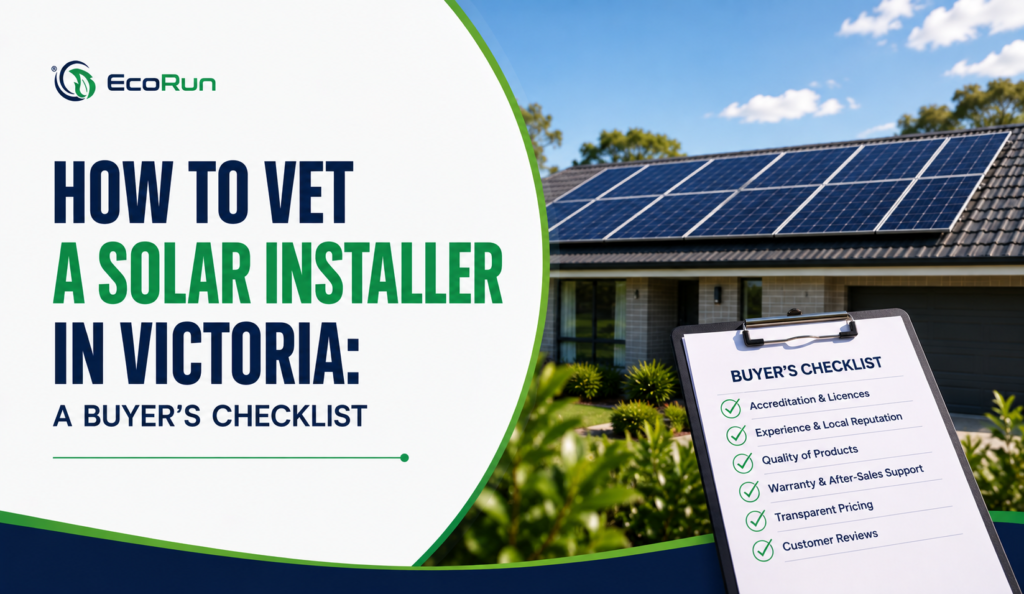
With dozens of solar companies competing for business across Melbourne’s south-east, picking the right installer matters more than picking the cheapest quote. A poorly installed system can cost you rebate eligibility, warranty coverage, and years of reduced performance. Here’s a practical checklist to work through before you sign anything.
1. Confirm CEC Accreditation of the Installer, Not Just the Company
Every company will claim to be accredited. What matters is whether the specific technician doing your installation currently holds Clean Energy Council accreditation. This is checkable in under two minutes on the CEC’s public installer search tool, and it’s the single most important box to tick it directly affects your rebate eligibility, insurance validity, and warranty coverage.
2. Ask Whether Installation Is In-House or Subcontracted
Some solar companies are essentially sales operations that subcontract the physical installation to third-party crews, which can vary in quality and accountability from job to job. Ask directly: will the same company that sold me this system also perform the installation, and who do I call if something goes wrong in two years?
- Green flag: a fixed, named installation team employed directly by the company
- Red flag: vague answers about who performs the installation, or a different name/company on install day than who did the sales visit
3. Check the Panel and Inverter Brands Against the CEC Approved Products List
Not every panel sold in Australia qualifies for STC rebates products must be on the CEC’s approved list. Beyond rebate eligibility, stick to genuine Tier 1 manufacturers with an established Australian track record and local warranty support, rather than unfamiliar budget brands with no local presence if something fails.
4. Get the Warranty Terms in Writing — All Three Layers
A proper solar quote should separately specify three different warranties, since they’re easy to blur together in a sales conversation:
- Panel performance warranty — typically 25 years, guaranteeing a minimum output percentage
- Inverter product warranty — typically 5–10 years depending on brand, sometimes extendable
- Workmanship/installation warranty — provided by the installer, not the manufacturer, covering the physical installation itself
Ask what happens to your installation warranty if the installing company closes down — established, financially stable local businesses are lower risk here than newer entrants.
5. Read Reviews Critically, Not Just the Star Rating
A 4.5+ star average is a reasonable baseline, but read a sample of the actual reviews for detail: do reviewers mention specific technician names, timely responses to post-install issues, and clear communication? Vague, generic five-star reviews posted in a short burst can indicate incentivised reviews rather than a genuine track record.
6. Compare Quotes Like-for-Like, Not Just by Total Price
A quote $1,000 cheaper than the rest is meaningless without knowing what’s been substituted. Before comparing solar panel costs in Pakenham, confirm each quote specifies the same panel wattage and brand, the same inverter brand and warranty length, system size in kW (not just panel count), and whether STC and Solar Victoria rebates are already deducted from the price shown or added afterward.
7. Ask About Local Presence and Response Times
A local, established installer typically means faster response times for post-install questions or servicing, compared with a national call-centre model with no local technicians. Ask directly how many years the business has operated in your specific region, and how support requests are handled after installation — by phone, by a local team, or via an outsourced call centre.
Red Flags Checklist
- Reluctance to name the individual installer or confirm their CEC accreditation number
- High-pressure sales tactics, especially ‘today only’ pricing
- Quotes significantly below market average with vague justification
- No fixed physical business address, or an address that’s clearly a residential home
- Unwillingness to put warranty terms in writing before you sign
The Bottom Line
The cheapest quote and the best-value quote are rarely the same thing when it comes to solar. If you’re comparing solar panel installers in Pakenham, take the time to check accreditation, warranty terms, brand quality, installation standards, and local track record before signing. This helps protect your investment, rebate eligibility, and long-term system performance. Any installer confident in their work should welcome these questions rather than deflect them.
Frequently Asked Questions
Confirming the individual installer’s current CEC accreditation status — it’s checkable for free and directly affects your rebate eligibility, insurance, and warranty coverage.
Not necessarily. Compare quotes on equipment brand, warranty terms, and installer accreditation before price — a cheaper quote often reflects lower-tier equipment or subcontracted, variable-quality installation.
The Clean Energy Council maintains a public approved products list. Any panel or inverter not on that list won’t be eligible for STC or Solar Victoria rebates, regardless of build quality.
Not automatically, but you should ask who is accountable if something goes wrong after installation and confirm the subcontracted installers are also CEC-accredited. In-house teams generally offer clearer accountability.