
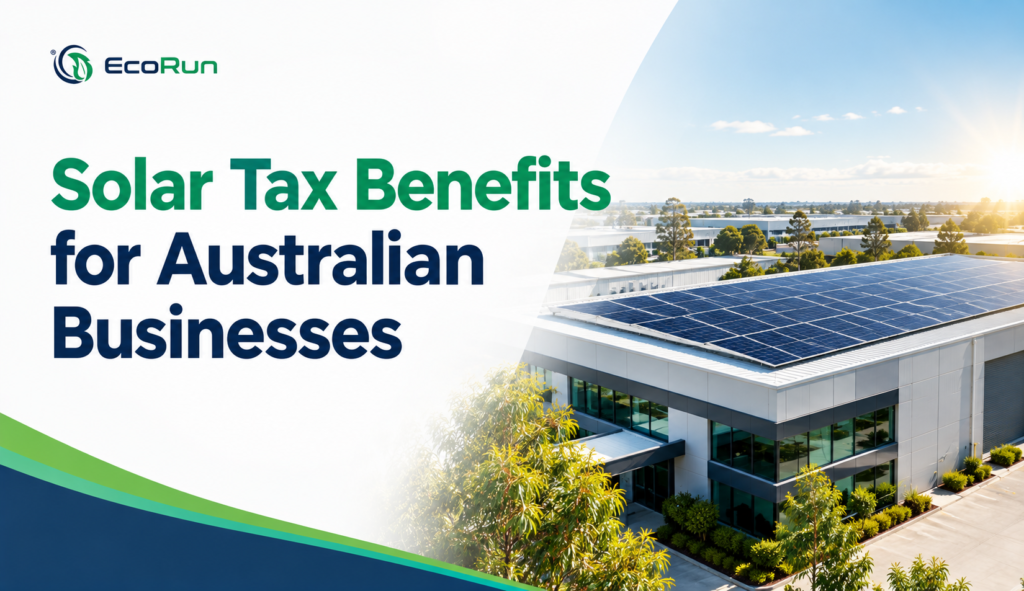
Beyond the direct energy savings, commercial solar installations can come with tax advantages that meaningfully change the effective cost of a system for Australian businesses. Tax settings change from year to year, so this is general context to bring into a conversation with your accountant not a substitute for that conversation. Here’s what’s generally relevant.
Depreciation on Commercial Solar Assets
Solar panels, inverters, and associated equipment installed for a business generally qualify as depreciating assets under Australian tax law, meaning their cost can be claimed over time against business income rather than sitting purely as a capital expense. The specific depreciation method and timeframe available depends on current ATO rules and your business’s circumstances, and can shift with each federal budget always confirm current settings with your accountant before finalising a purchase decision based on a specific tax outcome.
Instant Asset Write-Off Considerations
From time to time, the Australian Government has offered instant asset write-off provisions allowing eligible businesses to claim the full cost of qualifying assets (potentially including solar installations) in the same financial year, rather than depreciating the cost over several years. Thresholds, eligibility criteria, and whether the scheme is currently active all change regularly this is one of the most time-sensitive tax considerations for commercial solar, so timing your purchase around your accountant’s advice can matter more than for almost any other line item in your quote.
GST Considerations
For GST-registered businesses, GST paid on a commercial solar installation is generally able to be claimed as an input tax credit in the same way as other business equipment purchases, though your accountant should confirm this applies correctly to your specific business structure and reporting method.
Ongoing Running Cost Deductions
Beyond the upfront asset cost, ongoing costs associated with operating and maintaining a commercial solar system such as monitoring, cleaning, and repairs are generally treated as standard deductible business expenses, similar to other operational equipment costs.
How This Affects Your Effective Payback Period
When business owners calculate solar payback purely on energy bill savings, they often understate the real return by leaving tax benefits out of the picture entirely. A complete financial picture should combine energy savings, any applicable STC/rebate discounts at point of purchase, and the tax treatment your accountant confirms applies to your business together these can shift the effective payback period meaningfully compared to a bill-savings-only estimate.
Working With Experienced Solar Panel Installers in Pakenham
Choosing experienced solar panel installers in Pakenham can also help businesses better understand the full financial picture of a commercial solar project. A professional installer can provide a detailed quote covering system size, solar panels, inverters, installation costs, expected energy generation, and potential savings. This itemised information can then be shared with your accountant to help assess the applicable depreciation, GST treatment, and other tax considerations for your business.
When comparing commercial solar quotes, Pakenham businesses should look beyond the upfront system price and consider the quality of equipment, installation standards, system design, expected performance, warranties, and long-term support.
What to Bring to Your Accountant
- The full commercial solar quote, itemising equipment cost separately from installation labour
- Your business structure (company, trust, sole trader) since this affects available tax treatments
- Your current financial year’s income position, since timing a purchase can affect which tax year benefits apply
- Confirmation of whether the system will be used solely for business purposes or has any mixed use
A Note on Accuracy
Tax law changes regularly, and eligibility depends heavily on individual business circumstances. This article is general information to prompt the right conversation, not tax advice always confirm current rules and how they apply to your specific business with a qualified accountant before making a purchase decision based on an assumed tax outcome.
Frequently Asked Questions
Generally yes, through depreciation or potentially an instant asset write-off if currently available but the exact treatment depends on current ATO rules and your business circumstances. Confirm with your accountant before assuming a specific outcome.
Eligibility and thresholds for instant asset write-off schemes change regularly and are set federally. Check current ATO guidance or ask your accountant, since this is one of the most time-sensitive factors in commercial solar purchase timing.
GST-registered businesses can generally claim input tax credits on solar equipment purchases, similar to other business asset purchases, though your accountant should confirm this applies correctly to your reporting method.
Timing can matter, particularly around end-of-financial-year decisions or when time-limited schemes like instant asset write-offs are active. Discuss timing with your accountant alongside your solar quote before deciding when to proceed.